Good Employees Don't Leave for Nothing: The Real Reasons and 15 Ways to Keep Them
Your best employee's resignation letter was written months before they handed it to you. Here's why good people really quit, what it costs you, and how to keep them
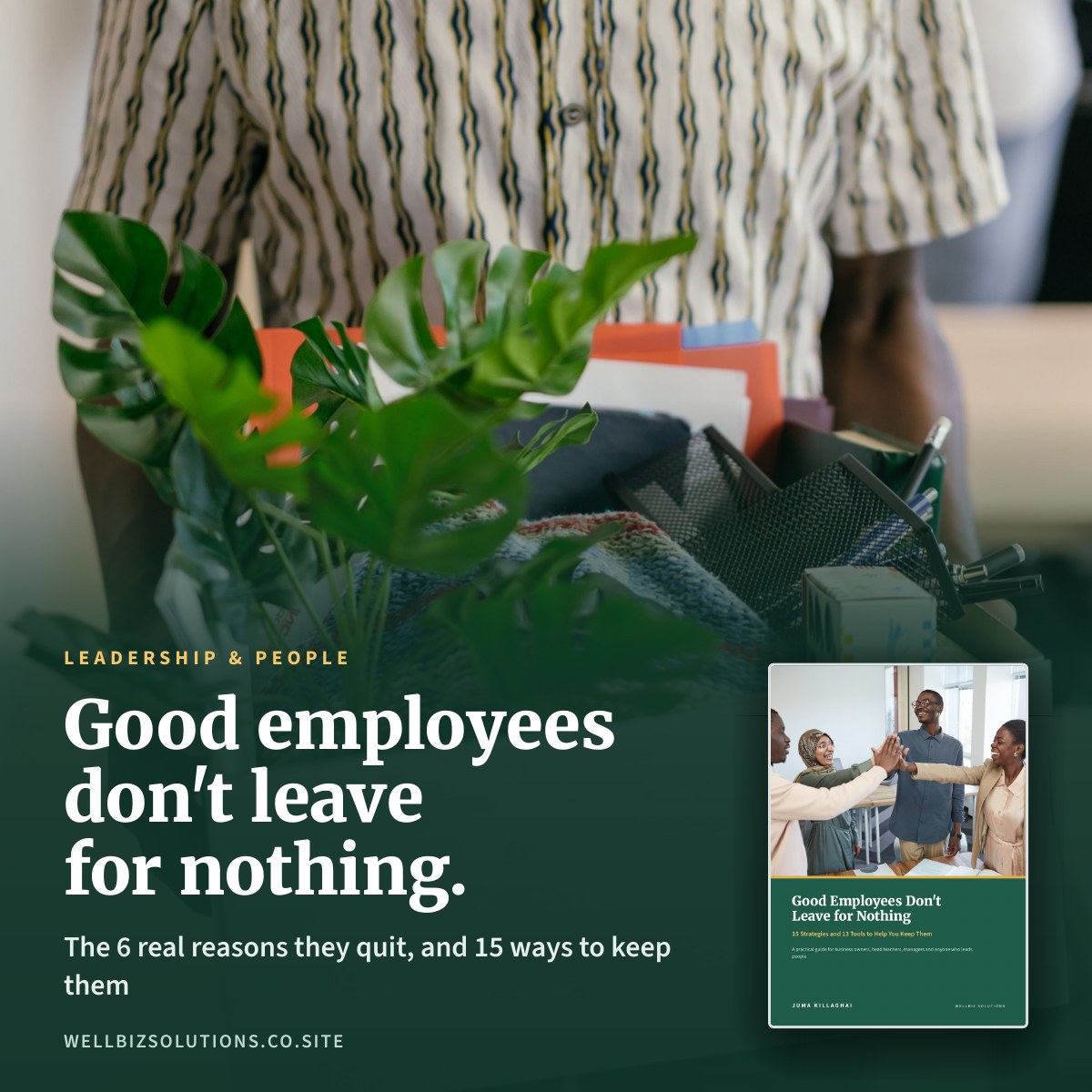
Imagine this.
National exams are only a few months away. You are the head of a school, sitting in your office, thinking about how to get good results this year. There is a knock at the door. In walks your mathematics teacher, the one you rely on more than anyone else.
"Good morning, Head. I have come to let you know that I have decided to resign."
You freeze. Anger rises. As the teacher turns to leave, you call out: "Wait!"
"And others are thinking of leaving too," comes the reply. The door closes.
Now change the setting. The head mechanic at your garage. Your accountant of five years, one month before the audit. Your top salesperson, who takes your biggest customers along to a competitor. The story is the same. And in almost every case, the leader is the last person to find out.
Why Keeping Good Employees Is Harder in 2026
Finding skilled, reliable people was never easy. Keeping them has become even harder, for three reasons:
- New job offers are one message away. LinkedIn, WhatsApp groups and online work mean your best people see new opportunities every single day.
- A new generation has different expectations. Gen Z employees (born roughly 1997 to 2012) see a job as a step in their journey, not a lifetime commitment. They value growth, feedback, respect and meaningful work as much as salary.
- Experienced workers are retiring, taking years of knowledge with them.
This doesn't mean young people are "disloyal." It means the old ways of managing people no longer work, and "there are no jobs out there" is no longer a retention strategy.
The 6 Real Reasons Good Employees Quit
Ask any manager why someone left, and you'll usually hear: "They got more money elsewhere." Sometimes that's true. But a satisfied employee doesn't scroll through job adverts every evening. A bigger offer only works when someone already has reasons to leave. The real question is: why were they ready to listen?
- Their immediate manager. People don't leave companies; they leave managers. A boss who belittles, shouts, takes credit or plays favourites will empty a team, however good the organisation is.
- No room to grow. Three years doing the same work with no conversation about the next step, and people start asking, "How long will I stay here like this?"
- Not feeling valued. They go the extra mile, and nobody even says "thank you." Recognition costs almost nothing. Its absence costs a great deal.
- Burnout. The best people get the most work because they're trusted. Then they watch careless colleagues relax, and trust turns into exhaustion.
- Unfair pay. People can live with an average salary. What they can't live with is discovering that a new, less experienced colleague earns more.
- Broken promises. The job they were sold at the interview is not the job they got.
Notice something? Almost all six are within your control as a leader.
What Losing One Good Employee Really Costs You
Most leaders count only the cost of the job advert. That's the tip of the iceberg. Below the waterline sit the costs that never appear on a receipt: the empty position, months of a new hire learning the job at half productivity, supervisor time, customers who follow the departing employee, knowledge that walks out of the door, and the morale of everyone who stays.
Research by Gallup estimates that replacing an employee costs between half and twice their annual salary. For an employee earning TSh 1,200,000 a month, that's roughly TSh 7.2 million to TSh 28.8 million, for one departure.
The good news? Gallup also found that more than half of employees who left voluntarily said their manager or organisation could have done something to keep them. In other words, much of your turnover is preventable.
15 Proven Strategies to Keep Your Best Employees
These 15 strategies follow the employee's journey through your organisation, from the day you hire them to the day (if it comes) they leave. Most of them cost nothing but time and intention.
Part 1: Start right
1. Hire carefully, and don't fear an open position. One wrong hire creates two problems: they leave, and meanwhile they overload your best people. Be honest about the job, and use the same criteria for every applicant.
2. Plan the first 90 days. Many new employees decide within three months whether to stay. Have their equipment ready on day one, give them a workplace buddy, and set clear 30-, 60- and 90-day goals.
3. Make the first day memorable. A short welcome letter, an introduction to the team, and a shared lunch tell a new employee: we're glad you're here.
Part 2: Build a workplace people want to stay in
4. Offer flexibility where you can. Shift swaps, flexible start times or a day working from home can keep a parent or a student on your team. Measure results, not hours in the office.
5. Take burnout seriously. Share the workload fairly, make sure people actually take their leave, and make it safe to say "I'm overwhelmed."
6. Care about their family. Flexibility for a sick child, a card for a child who graduated, presence at a wedding or a funeral: these are remembered for years.
Part 3: Leadership and relationships
7. Hold regular one-to-ones. Twenty minutes a month with each person, about their work and their goals, not just today's tasks. Thank people for specific things.
8. Identify and fix poor managers. Ask employees, anonymously, to rate their manager. Then act on the results. An assessment without action is worse than none.
9. Don't protect underperformers. Nothing drives good people away faster than carrying a lazy colleague's load while everyone is paid the same. Address it early, fairly and in writing.
Part 4: Growth and rewards
10. Give people room to grow. New skills, new responsibilities, a clear path to the next level. The untrained are more likely to leave than the trained.
11. Make pay fair and understandable. Don't wait for a competitor's offer before adjusting the pay of someone who deserves it. That teaches everyone that threatening to leave is the only way to get a raise.
12. Hold stay interviews. Don't wait for the exit interview. Ask your best people now: What keeps you here? What might make you leave? Then act on one thing they say.
Part 5: Listen early, plan ahead
13. Take your team's temperature. A short anonymous survey every few months shows problems before they become resignation letters. (But never turn early warning into spying: trust is the foundation.)
14. Have a plan for your key people. Know who would hurt most to lose, what motivates each of them, and who is being prepared to step in.
15. Keep the door open. Say goodbye with respect. Former employees who return, the so-called "boomerangs", are often among your best.
Back to That Mathematics Teacher
The teacher didn't decide to leave that morning. The decision built up over months, through small things nobody noticed or listened to. And "others are thinking of leaving too" was a sign of something bigger.
Now imagine the same story, except that six months earlier, the head teacher had asked one simple question: "What keeps you here, and what might make you leave?"
That is the whole lesson: don't wait for an employee to knock on your door to say goodbye.
📘 Want the Step-by-Step System and the Tools to Do It?
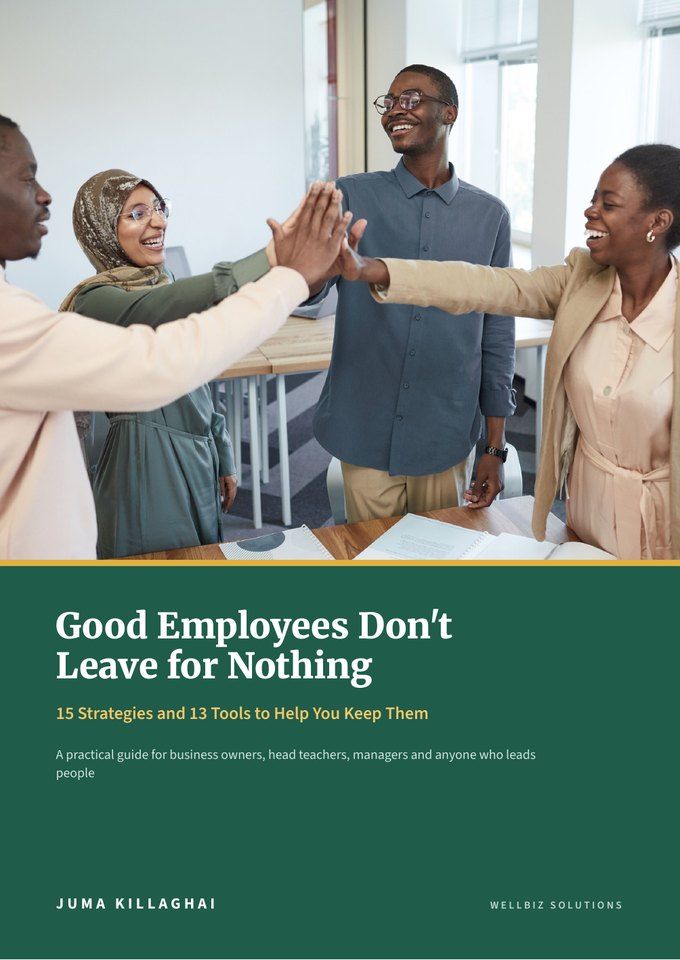
This article gives you the reasons and the strategies. The e-book Good Employees Don't Leave for Nothing gives you the how: every strategy explained step by step, with common mistakes, real examples, a chapter for small businesses on a tight budget, and a 30-day action plan.
Plus 13 ready-to-use tools as editable Word files, including a turnover cost calculator, an interview scorecard, a 90-day onboarding checklist, a stay interview guide, a team temperature survey, a manager evaluation card and an exit interview form. Add your organisation's name, print, and start tomorrow morning.
How to get your copy:
- Click payhip.com/b/TXqP6
- Tap "Buy Now" and complete checkout
- Download the 93-page PDF and the 13 Word tools instantly
Compare the price with the millions of shillings it costs to lose just one good employee. It's the cheapest retention decision you'll make this year.
👉 Get the e-book and the 13 tools
Prefer Kiswahili? Get the Kiswahili edition: Wafanyakazi Bora Hawaondoki Bure
Frequently Asked Questions
What is the main reason good employees leave?
Money is often the reason given, but it is rarely the only one. The most common real reasons are a poor relationship with the immediate manager, no room to grow, not feeling valued, burnout, unfair pay, and a job that doesn't match what was promised.
How much does it cost to replace an employee?
Gallup estimates that replacing an employee costs between half and twice their annual salary, once you count recruitment, the empty position, the learning period, supervisor time and lost customers.
What is a stay interview?
A stay interview is a short, private conversation with a current employee about what keeps them in the job and what might make them leave. Unlike an exit interview, it happens while there is still time to act.
Can a small business with a small budget keep good employees?
Yes. Many of the most effective retention strategies, such as specific recognition, stay interviews, fair workload and a good welcome for new employees, cost nothing but time and intention.
Where can I get ready-made employee retention tools?
The e-book Good Employees Don't Leave for Nothing by Juma Killaghai includes 13 editable Word tools, including a turnover cost calculator, a 90-day onboarding checklist and a stay interview guide. It is available on Payhip for $12.
Final Word
Good employees don't leave for nothing. They leave for a reason, and most of those reasons are within your power to fix. Choose one person this week, have one honest conversation, and take one action. Your best people are your greatest asset. Protect them.
Need help with HR policies, staff training or leadership workshops? Call or WhatsApp us: +255 754 281 131 / +255 655 281 131
Found this helpful? Share it with a business owner or manager who can't afford to lose their best people.
Source: Gallup, "This Fixable Problem Costs U.S. Businesses $1 Trillion" (gallup.com/workplace).
Join the conversation