Serengeti Shall Not Die: The Film, the Grzimeks and the Grave on Ngorongoro
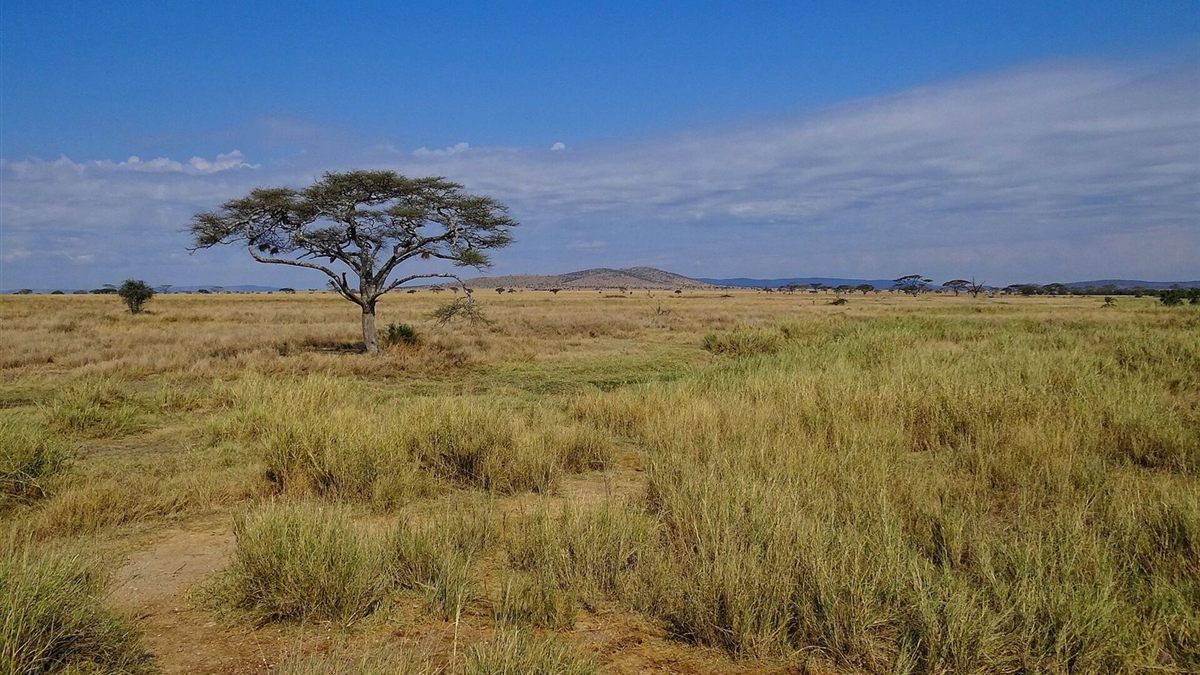
Today, millions of people know the Serengeti. They have seen the wildebeest crossing rivers on TV, the lions resting on rocks, the endless golden grass. But seventy years ago, very few people outside East Africa had heard of it at all.
One film helped change that. It was called Serengeti Shall Not Die. It won an Oscar, it made the Serengeti famous around the world, and it cost a young man his life. His grave is still there, on the rim of the Ngorongoro Crater, where any safari traveller can stand beside it today.
Here is the story.
A father, a son and a big question
Bernhard Grzimek was the director of the Frankfurt Zoo in Germany. His son Michael was in his early twenties and shared his love of wild animals. In the late 1950s, the Serengeti was a protected area under British colonial rule, and there were plans to change its boundaries.
The Grzimeks were worried. Nobody really knew how many animals lived in the Serengeti, or where the great herds went during the year. If the boundaries were drawn in the wrong place, they feared, the migrating animals would walk straight out of protection. So they decided to find out for themselves.
The zebra-striped plane
Michael learned to fly, and they bought a small Dornier Do 27 aeroplane and painted it with black and white stripes, like a zebra. Over 1957 and 1958, they flew low over the plains in long, careful lines, counting animals from the air and following the herds as they moved.
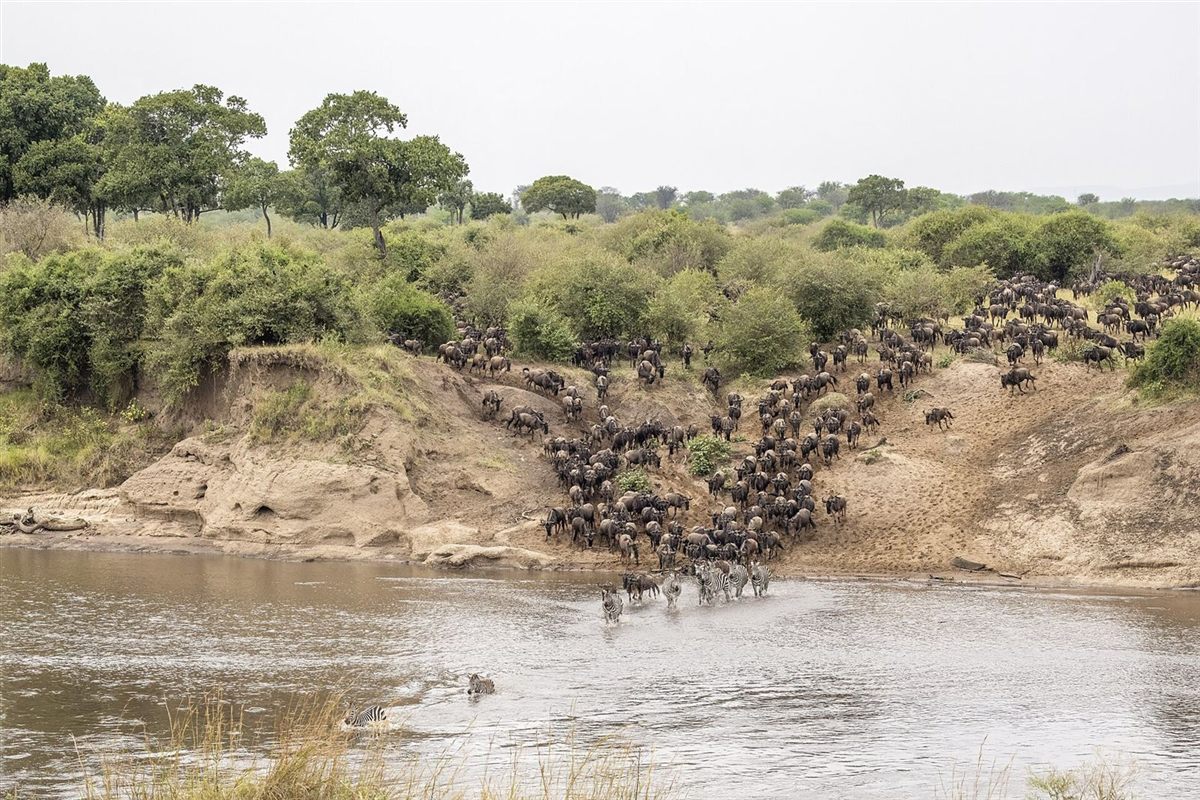
It was one of the first aerial wildlife surveys of its kind. It showed that the great herds did not stay inside one area. They moved in a huge loop across the whole ecosystem, following the rains and the fresh grass. Today we call this the Great Migration.
10 January 1959
On 10 January 1959, Michael was flying alone over the Serengeti when a vulture hit his plane. The collision damaged the controls, the plane went into a dive, and Michael was killed. He was just 24.
He was buried the same day on the rim of the Ngorongoro Crater, looking out over one of the most beautiful places on Earth. Later, the government of Tanzania placed a stone pyramid over his grave. The words on it are simple and moving:
"He gave all he possessed, including his life, for the wild animals of Africa."
The film and the Oscar
Bernhard finished the work they had started together. Their book and the film, both called Serengeti Shall Not Die (in German, Serengeti darf nicht sterben), came out in 1959. The film won the Academy Award for Best Documentary Feature at the 1960 ceremony, and it is often described as the first German film to win an Oscar.
For many viewers in Europe and America, it was their first look at the Serengeti. The title was a call to action: this place is precious, and it will disappear if we don't protect it.
A legacy, with an honest footnote
Bernhard Grzimek spent the rest of his life campaigning for African wildlife, and the Frankfurt Zoological Society still supports conservation in Tanzania today. The Serengeti became a UNESCO World Heritage Site in 1981, and it is now one of the most famous national parks in the world.
It is fair to add one footnote. The film shared a common view of its time: that wild places should be kept free of people. That idea has been criticised, because Maasai herders had lived alongside these animals for generations. Today, conservation in Tanzania increasingly tries to balance the needs of wildlife and of the communities who live around it. The Grzimeks' story is part of that bigger conversation.
Bernhard died in Frankfurt in March 1987. As he wished, his ashes were brought to Tanzania and laid beside his son on the crater rim.
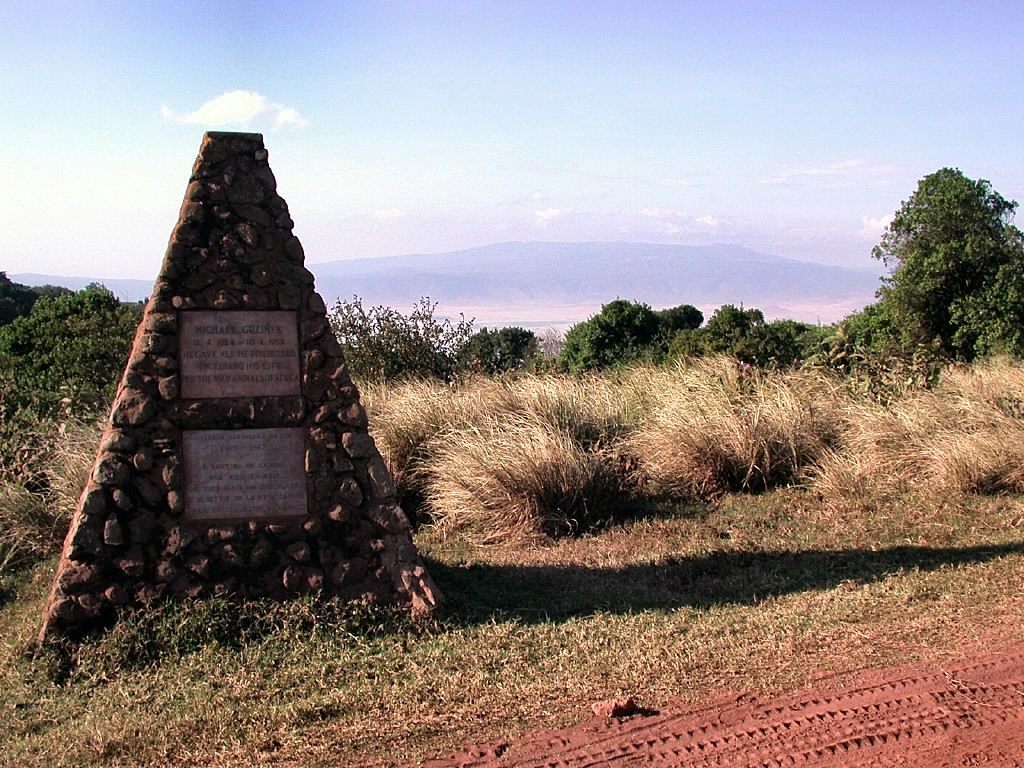
How to visit the Grzimek memorial
- Where: on the rim of the Ngorongoro Crater, inside the Ngorongoro Conservation Area in northern Tanzania.
- When: it's an easy stop on any northern circuit safari, usually on the drive to or from the crater or the Serengeti. Ask your guide to include it; it takes about 15–20 minutes.
- Cost: there is no separate ticket. You only pay the normal Ngorongoro Conservation Area entry fee, which every safari through the area already includes.
- Tip: the rim is at about 2,300 metres and can be cold, especially early in the morning. Bring a warm jacket.
- Be respectful: it is a grave as well as a viewpoint. Take a quiet moment before you take your photos.
Planning your own Serengeti trip?
Our Tanzania Travel Prospectus 2026/27 is a trip-planning bundle written in Dar es Salaam for first-time visitors. You get:
- A 26-page illustrated guide with maps, the Great Migration calendar, Serengeti, Ngorongoro, Kilimanjaro and Zanzibar
- 2026/27 park fees, real safari costs, and the new visa and insurance rules
- A checklist for choosing a trustworthy safari operator
- An editable itinerary planner and a budget calculator (Excel)
- An 80-phrase Swahili sheet for your trip
Launch offer: 30% off with code KARIBU30 until 11 November 2026.
Frequently asked questions
What is Serengeti Shall Not Die?
It's a 1959 German documentary by Bernhard Grzimek about the Serengeti and the aerial survey he made with his son Michael. It won the Academy Award for Best Documentary Feature at the 1960 ceremony. A book with the same title came out the same year.
Where are Bernhard and Michael Grzimek buried?
On the rim of the Ngorongoro Crater in northern Tanzania. Michael was buried there in January 1959, and Bernhard's ashes were laid beside him in 1987.
Can tourists visit the Grzimek memorial?
Yes. It's on the crater rim inside the Ngorongoro Conservation Area, so it's easy to add to a northern safari. Just ask your guide.
How did Michael Grzimek die?
On 10 January 1959, his small plane hit a vulture while he was flying alone over the Serengeti. The plane crashed and he was killed, aged 24.
Keep reading
- Best time to see the Great Migration: a month-by-month guide
- Serengeti National Park fees 2026/27: what you’ll really pay
Sources: Wikipedia articles on Serengeti Shall Not Die and Michael Grzimek. Visitor details checked October 2026; confirm current fees and access with your safari operator.
Join the conversation